Amazon WorkSpaces Unleashes AI Agents on Legacy Applications, Revolutionizing Enterprise Automation Without Costly Modernization

In a significant stride towards democratizing enterprise AI adoption, Amazon Web Services (AWS) has announced a groundbreaking new capability for Amazon WorkSpaces, enabling Artificial Intelligence (AI) agents to securely operate desktop applications without requiring extensive application modernization. This development directly addresses a critical bottleneck for businesses eager to leverage AI, particularly those heavily reliant on legacy systems and desktop-based workflows that have historically been inaccessible to modern AI solutions. The announcement marks a pivotal moment, transforming WorkSpaces from a mere virtual desktop infrastructure into a powerful conduit for scaling enterprise productivity through intelligent automation.
The Persistent Challenge of Legacy Systems in the Age of AI
Enterprises globally face an arduous journey when attempting to integrate cutting-edge AI technologies into their operational fabric. The primary obstacle often lies in the vast landscape of existing desktop and legacy applications that underpin the majority of business workflows. These applications, many of which have served as critical operational pillars for decades, were not designed with modern API-driven interoperability in mind. A compelling 2024 Gartner report underscores the severity of this challenge, revealing that a staggering 75% of organizations continue to run legacy applications that lack contemporary APIs. Furthermore, the report highlights that 71% of Fortune 500 companies operate critical processes on mainframe systems, many of which suffer from inadequate programmatic access. This architectural chasm between legacy infrastructure and modern AI capabilities has presented organizations with an unenviable dilemma: either defer AI adoption, thereby risking competitive disadvantage, or embark on prohibitively expensive and inherently risky modernization projects that can span years and consume vast resources. These modernization efforts often entail rebuilding applications, migrating data, or developing complex custom API layers, each carrying its own set of technical complexities, budget overruns, and potential disruptions to ongoing operations. The inability for AI agents to seamlessly interact with these entrenched systems has long been a significant barrier, limiting the scope and impact of AI-driven automation within the enterprise.

Amazon WorkSpaces: A Bridge for AI Agents
AWS’s latest innovation fundamentally redefines this landscape by transforming Amazon WorkSpaces into an infrastructure capable of hosting and orchestrating AI agents. WorkSpaces, already a trusted managed virtual desktop service utilized by millions of employees worldwide for secure remote access to applications and data, now extends its utility to autonomous AI entities. The core premise of this new feature is remarkably straightforward: AI agents can now leverage the same secure, governed virtual desktop environments that human employees use, allowing them to interact with any desktop application as if they were a human user. This eliminates the need for enterprises to undertake costly and time-consuming application modernization projects. By operating within the existing WorkSpaces environment, organizations are freed from the burden of building new APIs, planning complex application migrations, or managing additional infrastructure dedicated solely to AI agent integration. This approach not only accelerates AI adoption but also significantly de-risks the process, allowing businesses to immediately unlock the automation potential of their legacy applications. The inherent design of WorkSpaces ensures that agents operate within a tightly controlled and isolated environment, preventing unauthorized access or interference with other systems.
Technical Architecture and Security Framework
The integration of AI agents into Amazon WorkSpaces is built upon a robust technical architecture designed for security, auditability, and seamless operation. AI agents authenticate through AWS Identity and Access Management (IAM), leveraging existing enterprise identity policies to ensure granular control over their access permissions. This means that an agent’s capabilities and reach within the virtual desktop environment can be precisely defined and restricted, mirroring the security protocols applied to human users. Once authenticated, agents connect via WorkSpaces, with every action and interaction meticulously recorded. Comprehensive audit trails are automatically generated and made available through AWS CloudTrail, providing an immutable log of agent activities for compliance, security monitoring, and post-incident analysis. Furthermore, Amazon CloudWatch integration offers real-time monitoring of agent performance and system health, enabling administrators to quickly identify and address any anomalies. A cornerstone of this secure design is the principle that agents operate exclusively within their designated WorkSpaces environments. This isolation ensures that existing enterprise security controls, data loss prevention policies, and compliance frameworks remain fully intact and are automatically extended to AI agent operations. This is a critical advantage for organizations in regulated industries, where maintaining stringent security and compliance postures is not merely a "nice-to-have" but an absolute baseline requirement.

The new WorkSpaces capability also embraces industry standards, supporting the Model Context Protocol (MCP). This adherence to MCP is crucial for interoperability, ensuring that WorkSpaces can seamlessly integrate with a wide array of popular agent frameworks. Developers can leverage established tools like LangChain, a powerful framework for developing applications powered by large language models; CrewAI, designed for orchestrating multi-agent systems; and Strands Agents, another emerging platform for intelligent automation. This broad compatibility means that organizations are not locked into a specific agent development ecosystem but can choose the frameworks best suited to their specific needs and existing skillsets.
Implementation and User Experience: A Practical Walkthrough
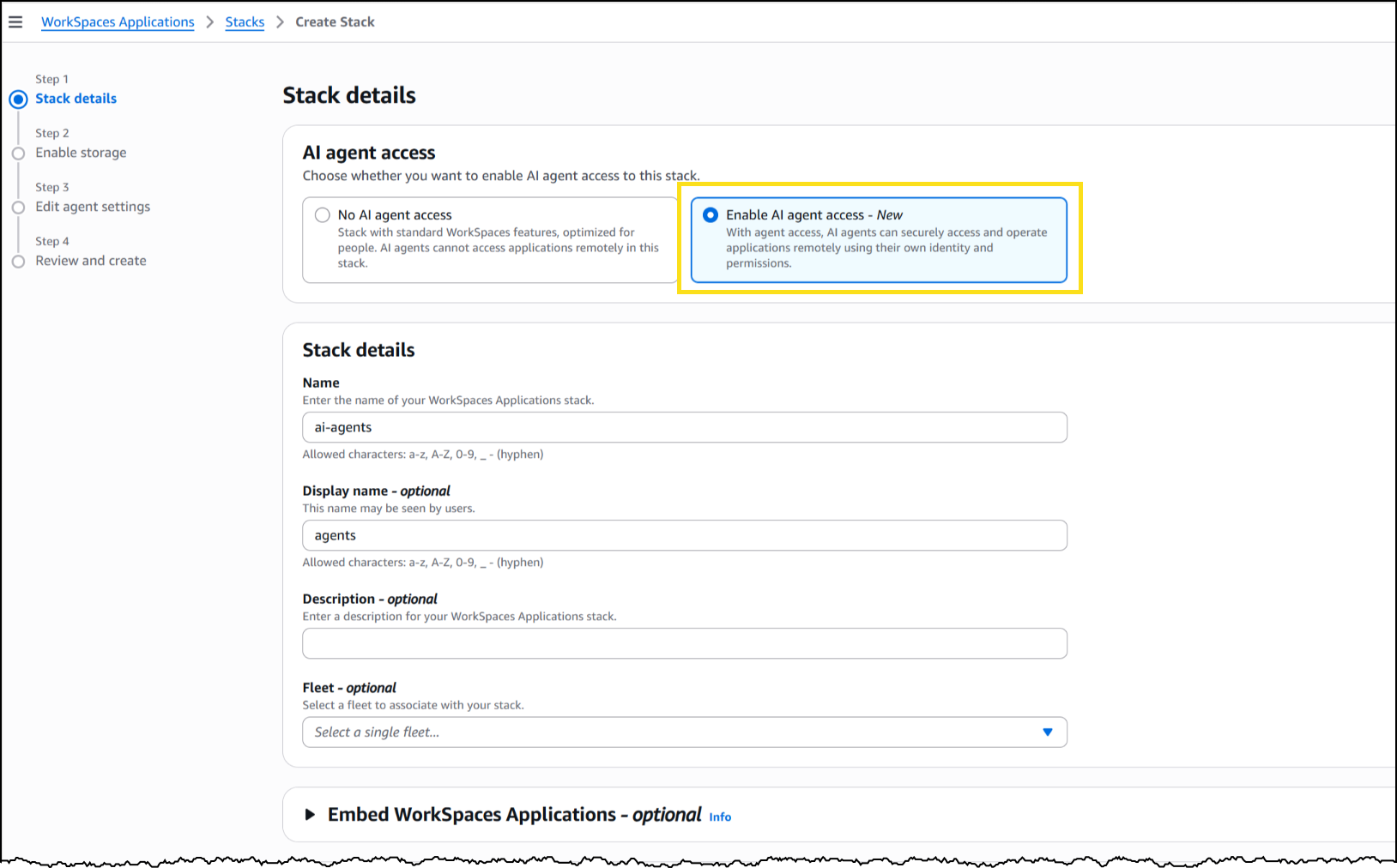
Setting up a WorkSpaces environment for AI agents involves a guided process within the AWS Management Console, designed to be intuitive for administrators already familiar with WorkSpaces. The initial step involves creating a new WorkSpaces Applications stack, which serves as the foundational environment definition, dictating how agents connect and the scope of their permitted actions. During the stack creation workflow, administrators encounter a new "AI agents" section, presenting two distinct options. The default, "No AI agent access," maintains the standard configuration for human-centric WorkSpaces. The crucial "Add AI Agents" option, however, activates the necessary functionalities for AI agents to securely access and operate applications using their own distinct identity and permissions.
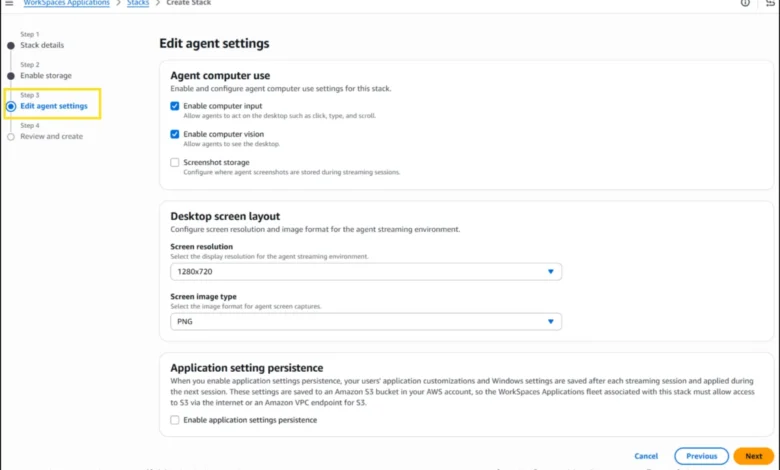
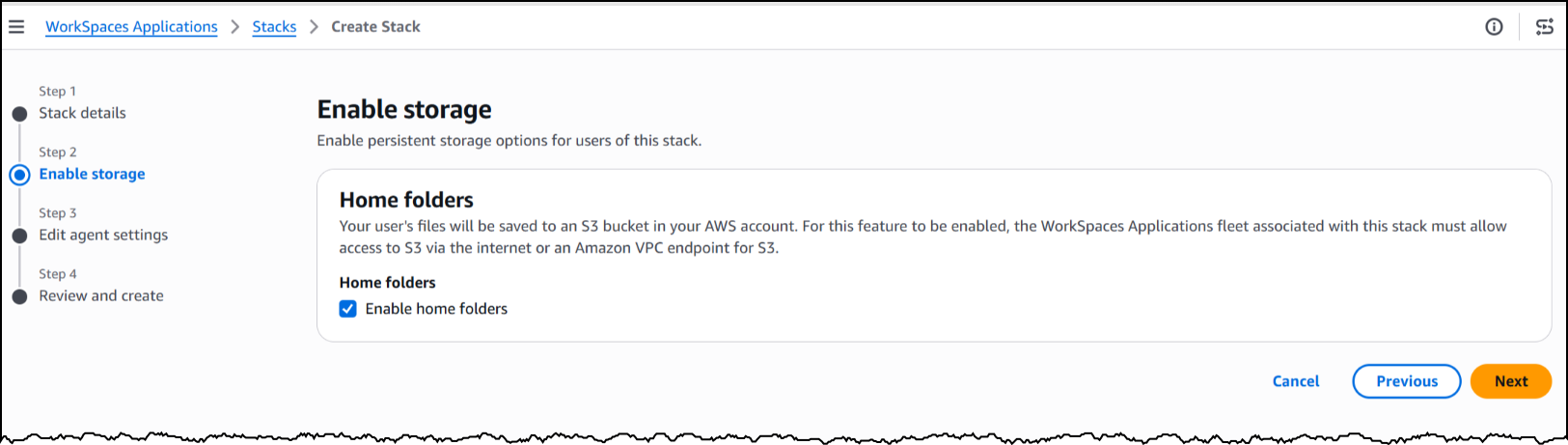
Following the selection of "Add AI Agents," administrators proceed to enable storage and configure granular agent access settings. Under "Agent features," three critical capabilities are enabled:
- Computer input: This feature grants the AI agent the ability to simulate human input, including clicking, typing, and scrolling within the virtual desktop environment. This is fundamental for agents to interact with graphical user interfaces (GUIs) and application elements.
- Computer vision: This capability allows the agent to capture screenshots of the desktop. This is how the AI agent "sees" the application interface, interpreting visual information to understand the current state of the application and identify elements for interaction.
- Screenshot storage: This setting configures the secure storage location for session screenshots, which are vital for audit trails, debugging agent behaviors, and verifying compliance.
Further customization is available under "Desktop screen layout," where parameters such as screen resolution and image format (e.g., PNG) are defined. The chosen resolution directly impacts the fidelity of the visual information the agent receives. For complex applications with dense user interface elements, a higher resolution might be beneficial for precise interaction, while simpler, terminal-style interfaces could operate effectively at 720p. Once the stack is configured, WorkSpaces exposes a managed MCP endpoint. Developers can then point their chosen agent framework to this endpoint, provide the necessary IAM credentials for authentication, and the AI agent can commence interacting with the desktop applications installed on the fleet’s image. A compelling demonstration involved an agent, built with the Strands Agent SDK and powered by Amazon Bedrock, automating a prescription refill process. This agent navigated a sample pharmacy system, looking up patient records, searching for medication, placing the order, and confirming a successful refill – all without a single API call to the legacy application. Crucially, the application itself remained unaware that an AI agent, rather than a human, was driving its interface; no modifications or integrations were required for the software.
Industry Reactions and Strategic Implications
Early customer feedback highlights the transformative potential of this new WorkSpaces capability. Chris Noon, Director at Nuvens Consulting, a company likely focused on cloud solutions for businesses, shared a crucial perspective: "WorkSpaces lets our clients give AI agents the same secure, governed desktop environment their employees already use – no custom API integrations, full audit trails, and enterprise-grade isolation out of the box. For regulated industries, that’s not a nice-to-have – it’s the baseline." Noon’s statement underscores the critical importance of built-in security, governance, and auditability for organizations operating under strict regulatory frameworks, such as finance, healthcare, and government. These sectors often struggle the most with AI adoption due to the stringent compliance requirements surrounding data access and process execution. The ability to integrate AI agents within an already compliant and secure virtual desktop environment significantly lowers the barrier to entry for these industries, enabling them to explore AI automation where it was previously deemed too risky or complex.
The strategic implications extend beyond immediate productivity gains. This development from AWS is poised to democratize AI access for a vast swathe of enterprises that previously considered advanced automation out of reach. By abstracting away the complexities of legacy integration, AWS is enabling a broader range of businesses to experiment with and deploy AI agents for tasks ranging from data entry and report generation to complex multi-application workflows. This could lead to a significant acceleration in the adoption of intelligent automation across various sectors, fostering innovation and allowing human employees to focus on higher-value, more creative tasks.
Future Outlook and Broader Impact
The launch of AI agent access for Amazon WorkSpaces represents more than just a new feature; it signifies a strategic pivot in how enterprises can approach AI integration and automation. This capability is currently available in public preview, accessible in key AWS Regions including US East (N. Virginia, Ohio), US West (Oregon), Canada (Central), Europe (Frankfurt, Ireland, Paris, London), and Asia (Tokyo, Mumbai, Sydney, Seoul, Singapore), with no additional cost beyond standard WorkSpaces usage. This broad regional availability ensures that a significant portion of AWS’s global customer base can immediately begin experimenting with and deploying this new functionality.
The long-term impact of this innovation is multifaceted. It promises to significantly reduce the total cost of ownership for automation projects by eliminating the need for expensive application re-platforming or custom API development. For many organizations, the ability to leverage existing infrastructure and applications will translate into faster time-to-value for their AI investments. This could also intensify competition in the Robotic Process Automation (RPA) market, as traditional RPA solutions often require more bespoke integration and maintenance compared to a cloud-native, managed service approach. Moreover, the secure and auditable nature of WorkSpaces for AI agents will likely instill greater confidence among business leaders and compliance officers, paving the way for AI to handle increasingly critical and sensitive business processes. As AI capabilities continue to advance, the ability for these intelligent agents to interact with the entirety of an organization’s digital estate, including its most entrenched legacy systems, will become an indispensable asset in driving operational efficiency, enhancing customer experiences, and fostering sustainable growth. Developers and enterprises are encouraged to explore this capability using the provided GitHub repository for sample code and visit the Amazon WorkSpaces page for further details, marking the dawn of a new era for enterprise automation.